The Wolfe & Kensington field guide
Choose your
cocktail ice.
The right cut changes the whole serve. Find the ice that suits your drink, fits your glass, and works for your bar.
A practical guide for bartenders, restaurants & thoughtful hosts.
Free tools. No email required.
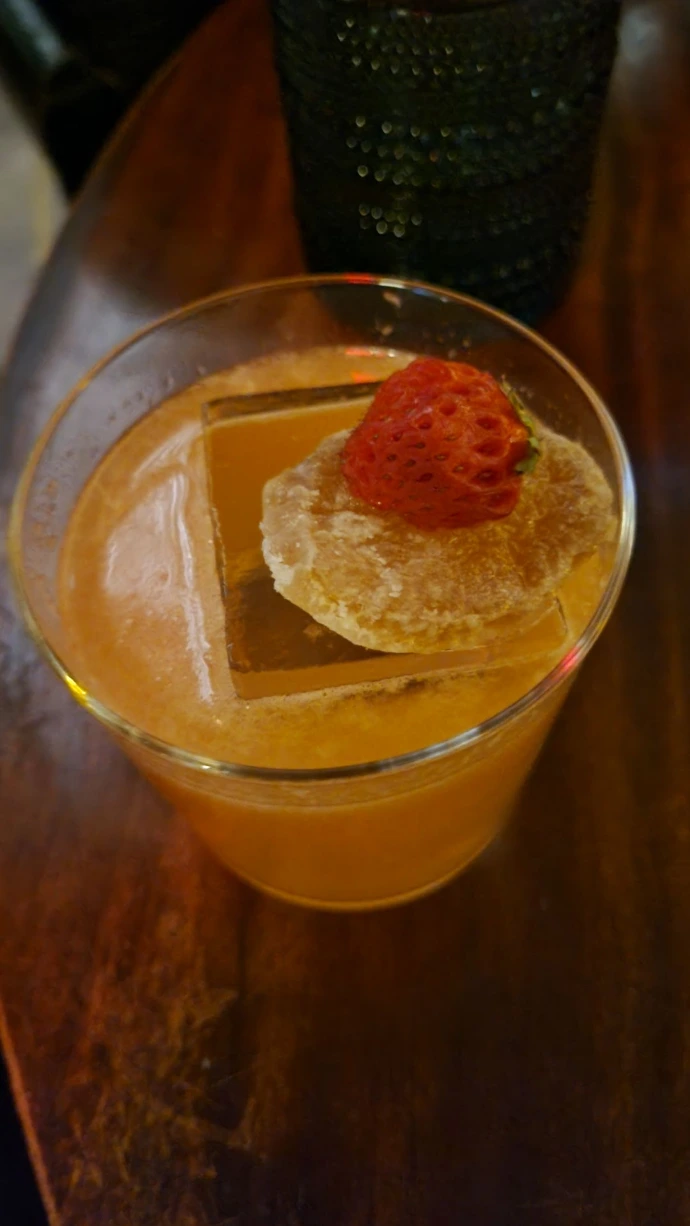
A signature moment.
01 / Start with the serve
What’s in the glass?
A Negroni and a highball ask different things of their ice. Pick your style, then add glass measurements if you have them.
Both measurements are optional.
Measure the narrowest internal width along the insertion path and where the ice will sit. Measure usable height from the inside base to the rim. See the fitting method ↓
Your starting point
A single, generous piece.
02 / The detail most people miss
A 2-inch cube needs
more than a 2-inch glass.
A square’s corners are wider than its sides. For a cube entering a round glass upright, use its diagonal to check the opening.
A 2-inch cube measures about 2.83 inches across its corners. Allowing another ⅛ inch of total diameter gives a planning target of 2.96 inches inside the glass.
This is geometry, not a promise of fit. Our tool adds ⅛ inch across the diameter and ¼ inch of vertical headroom as practical planning allowances. Actual ice, tapered or irregular glasses, garnish, liquid displacement and floating position still require a sample test. Values shown are rounded up.
- Geometric minimum width
- Width with allowance
- Height with headroom
Uses the glass measurements entered above. Assumes a round glass and an upright piece; it does not model tilting, stacking or several pieces together. For spheres, the width is the diameter.
Edit your glass measurements ↑03 / The bar reference
Eight cuts. Different jobs.
Compare the WK standard range by dimensions and intended serve. All eight formats below come in 25-piece packs. Dimensions describe the ice, not the glass.
Swipe the chart sideways to see all columns.
| Ice format | Dimensions | Minimum inside width | Width with allowance | A useful starting point |
|---|---|---|---|---|
| 2-inch signature cube | 2 × 2 × 2 in | 2.83 in | 2.96 in | Old Fashioneds, Negronis, rocks pours |
| 1.75-inch cube | 1.75 × 1.75 × 1.75 in | 2.48 in | 2.60 in | A single cube for a smaller rocks glass |
| 1.5-inch mini cube | 1.5 × 1.5 × 1.5 in | 2.13 in | 2.25 in | Smaller serves or several cubes per drink |
| 2.5-inch signature block | 2.5 high × 2 × 2 in | 2.83 in | 2.96 in | More height in a roomy rocks glass |
| 2.5-inch slim tall block | 2.5 high × 1.75 × 1.75 in | 2.48 in | 2.60 in | A taller presentation with a smaller footprint |
| 2.4-inch sphere | 2.4 in diameter | 2.40 in | 2.53 in | Whiskey pours and a rounded presentation |
| 4-inch Collins spear | 4 high × 1.25 × 1.25 in | 1.77 in | 1.90 in | Shorter Collins glasses and long drinks |
| 5-inch highball spear | 5 high × 1.25 × 1.25 in | 1.77 in | 1.90 in | Tall highballs, Collins and spritz-style serves |
The 2.5-inch signature block is 2.5 × 2 × 2 inches, not a 2.5-inch cube. The slim tall block keeps that height with a 1.75-inch square footprint. Both spears have a 1.25-inch square footprint; their height is what changes.
Keep it behind the bar.
A one-page reference with the cuts, fit checks and service-planning formula. Print it for your team or send it to a colleague.
Download the bar reference · PDF04 / Understand the ice
Clear thinking.
Better drinks.
Good ice selection is about the whole serve: cooling, dilution, space and presentation.
Clarity is a visual quality.
Directional freezing guides freezing from one direction, concentrating cloudiness toward the last part to freeze. The clear portion can then be separated. Clarity alone does not prove purity or a specific melt rate. [1]
Size changes the surface.
For the same amount of ice, fewer large pieces have less total surface area than many small ones. That helps explain why a large serving piece can hold up differently in a resting drink. Glass, temperature, stirring and time still matter. [2]
Shaking is a different job.
Serving ice and mixing ice are not interchangeable decisions. Shaking experiments show that sufficiently agitated drinks can reach similar chilling and dilution with different ice sizes. Follow a tested recipe; do not assume a large cube always means less dilution. [2]
Try this at your bar: compare two cuts in your actual glassware using the same recipe, starting temperatures and pour. Photograph the first serve, then taste at the same timed intervals. Record presentation, room for garnish and how the balance changes. Choose for the guest’s experience, not an unsupported “lasts X minutes” claim.
05 / Make it work at service
Count drinks.
Then count ice.
One guest may order more than one drink. Start with the number of drinks that will use this format, choose pieces per drink, and add your own spare allowance.
This estimates serving ice only. Plan mixing, shaking, chilling, ice baths and other formats separately. A 10% spare allowance is a starting assumption you can change, not a forecast of your venue’s usage.
Without the calculator: drinks × pieces per drink × (1 + spare percentage ÷ 100). Round up to a whole piece, then divide by 25 and round up for bags.
Make it your signature
One occasion.
A hundred small impressions.
For a corporate reception, birthday or anniversary, an engraved cube brings the occasion into the serve itself. Match the design to the moment, then check the glass before choosing the drink.
The brand moment
A company logo or venue mark for a reception, launch or signature cocktail.
Explore branded ice →The personal detail
Initials for weddings, private dinners and a considered finishing touch.
Explore monogram ice →The milestone
A birthday number or meaningful date for a celebration worth remembering.
Explore celebration ice →These engraved options use 2-inch cubes and are ordered per piece. Confirm artwork, quantity and timing for your event. For custom designs, see custom engraved ice.

Custom engraved ice, shipped to your door.
We ship our engraved cubes frozen with FedEx, carefully packed for your event. Share your delivery ZIP code and event date, and we will confirm shipping availability and pricing.
Questions from behind the bar
A few things worth getting right.
What ice should I use for an Old Fashioned?
A 2-inch clear cube is a useful starting point for a rocks presentation. First check the glass’s internal width and height. A 1.75-inch cube or 2.4-inch sphere may suit a different glass better. Use a recipe that accounts for dilution during preparation and service.
Does a sphere always melt slower than a cube?
A sphere has the smallest surface area for a given volume. But different product sizes contain different amounts of ice, and real drinks vary in temperature, agitation and contact with the glass. A sphere-versus-cube comparison is not meaningful without controlling those conditions.
How do I measure a tapered glass?
Measure inside, not outside. Use the narrowest internal diameter the piece must pass through and the width where you want it to sit. Our upright model is conservative: a cube that clears the rim can still catch lower down. A sample in your actual glass is the final check.
Should I replace crushed ice with a large clear cube?
Only if you intend to change the serve. Crushed ice affects texture, packing and dilution. For drinks built around it, keep the intended ice style. WK’s standard online cuts are serving cubes, blocks, spheres and spears; this guide does not list crushed ice as a WK product.
Can I try several formats before choosing?
The 75-piece variety pack includes 25 signature 2-inch cubes, 25 highball spears and 25 spheres. For your bar or restaurant, request a sample and wholesale pricing so we can discuss glassware and delivery.
How should I store the ice before service?
Keep it frozen in its packaging and away from strong-smelling foods. Avoid thawing and refreezing. Handle with clean ice tools and test your service routine with your actual freezer, glassware and cocktail recipes.
From the guide to your glass
Try the fit.
Find your signature.
We supply clear cocktail ice to bars and restaurants across New Jersey and New York City. Tell us about your glassware, menu and expected volume.
Useful things are worth sharing
Send the setup to your team.
Share this guide with a bartender, buyer or event planner. The result link keeps your selected style, glass measurements and service estimate.
Writing a bar training resource or cocktail guide? Link to this page so readers can use the tools and see the fitting assumptions.
Planning a wedding or event?
Use the fit and serving calculations above, then work through our custom wedding ice guide, quantity examples and venue checklist.
For your bar, compare buying ice with making it in-house. Check NJ delivery or NYC delivery for Saturday local delivery. Free delivery is available on orders of $199 or more; Orders below $199 are not eligible for local delivery. Outside our NJ & NYC delivery area? Contact us to confirm shipping availability, timing and pricing before ordering.